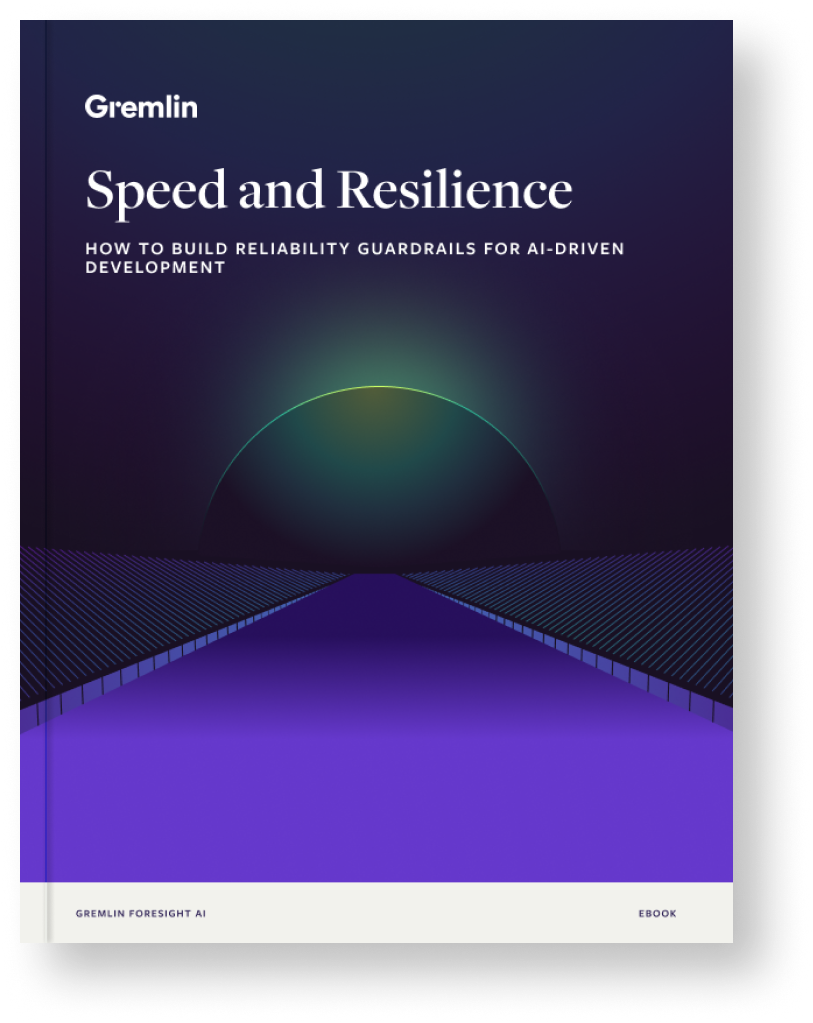
Speed and Resilience
How to Build Reliability Guardrails for AI-Driven Development
The promise of AI is that we can get more done faster with less. Unfortunately, going that fast isn’t without risk.
If we’re going to keep moving at the speed of AI, how can we move fast without breaking things? And, more importantly, how can we maintain customer trust and reliability?
Companies need to embrace reliability guardrails that are integrated into the agentic pipeline to find and fix reliability risks before they become incidents.
This whitepaper shows you how to create and automate those guardrails across your organization to keep your systems resilient at the speed of AI.
Download ebook
Thanks for requesting Speed and Resilience: How to Build Reliability Guardrails for AI-Driven Development. Click here to view the guide! (A copy has also been sent to your email.)
About the Authors
Jordan Pritchard
Director of Infrastructure & Site Reliability Engineering

Michael Kehoe
Architect of reliable, scalable infrastructure

Rodney Lester
Technical Lead, Reliability Pillar of Well Architected Program

Tammy Butow
Principal SRE

Jay Holler
Manager, Site Reliability Engineering

Ramin Keene
Founder

In this ebook, you'll learn:
• What reliability guardrails are and why they’re essential for AI-driven development.
• How to use AI capabilities to create an agentic resilience loop.
• How to AI integrate guardrails into your agentic pipeline and reporting process.
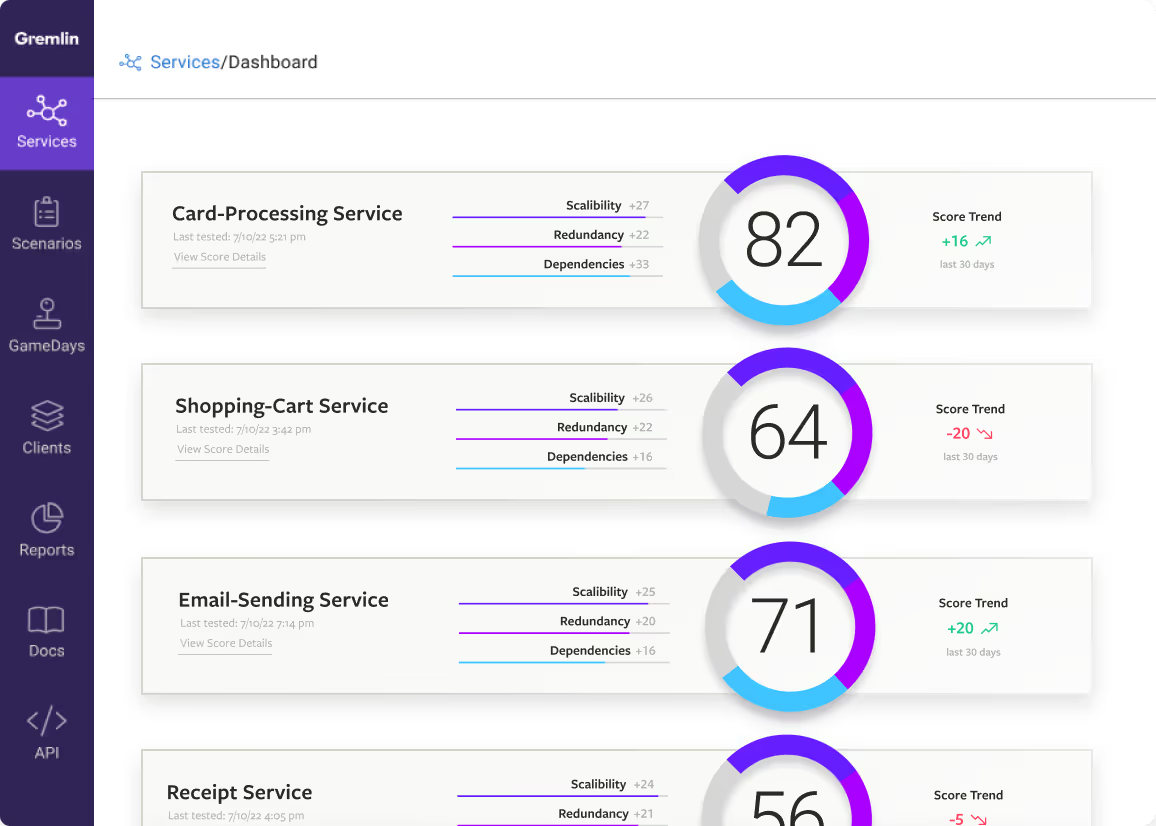
Avoid downtime. Use Gremlin to turn failure into resilience.
Gremlin empowers you to proactively root out failure before it causes downtime. See how you can harness chaos to build resilient systems by requesting a demo of Gremlin.
.svg)